
The Jane Street-Sebi saga is more than a legal dispute -- it's a litmus test for India's ambitions as a global financial hub.

The Supreme Court of India has reprimanded a Karnataka High Court judge for passing an inconsistent verdict, highlighting the crucial importance of consistent judicial outcomes for maintaining public trust. The court emphasized that inconsistent decisions from different benches undermine faith in the judiciary and can lead to "forum shopping" and other unethical practices.

Sexual intercourse, including unnatural act, by a man with his adult wife, even without her consent, can not be treated as an offence, the Chhattisgarh high court held while acquitting a Jagdalpur resident who was convicted of rape and other charges.

The Supreme Court on Friday directed a Sambhal trial court to temporarily halt proceedings in the case over the Mughal-era Shahi Jama Masjid and its survey at Chandausi while directing the UP government to maintain peace and harmony in the violence-hit town.

The West Bengal Board of Secondary Education (WBBSE) has appealed to the Supreme Court to modify its order annulling over 25,000 jobs in schools. The board argues that the termination of 11.3% of existing teachers would have a devastating impact on schools in the state and impact the education of over 78.6 lakh students. The WBBSE is seeking to allow untainted candidates to continue in service until the end of the academic year or until the process of fresh appointments is concluded, whichever is earlier.
The Allahabad high court has observed that 'protection of a person' from being charged in 'marital rape continues in cases where the wife is of 18 years of age or more'.

The Bangladesh Supreme Court has stayed a High Court verdict that declared 'Joy Bangla' as the country's national slogan, effectively reversing the decision. The government, which had moved to suspend the High Court's ruling, argued that the national slogan is a matter of policy and not subject to judicial interference. This decision comes amid political turmoil in the country, with the recent change of government and a focus on revising national symbols and holidays.
The appellant argued though he was held guilty of indulging in preparatory acts for the commission of a terrorist act and recruiting persons for terrorist act, there was no evidence to show he committed such acts.

The Supreme Court of India has ordered the Union government to grant a permanent commission to a woman officer in the Army Dental Corps who was denied benefits given to similarly placed officers. The court ruled that the woman officer was wrongly excluded from consideration and that the principle of "what is sauce for the goose ought to be sauce for the gander" applies in this case. The court directed the government to implement the order within four weeks and to extend all consequential benefits, including seniority, promotion, and monetary benefits, to the officer.
The Supreme Court of India has said that mere harassment is not sufficient to hold someone guilty of the offence of abetting suicide, and there must be clear evidence of direct or indirect incitement.

The Supreme Court of India has ruled that religious conversions undertaken solely to avail reservation benefits without genuine belief in the adopted religion amount to "fraud on the Constitution". The court upheld a Madras High Court decision denying a scheduled caste certificate to a woman who converted to Christianity but later claimed to be a Hindu to secure employment benefits.
The Supreme Court on Friday declared JSW Steel Limited's resolution plan for Bhushan Power & Steel Limited (BPSL) "illegal" and ordered the latter's liquidation, four years after the company was acquired by JSW Steel under the Insolvency and Bankruptcy Code (IBC). Following the ruling, JSW Steel shares fell sharply.
Registering the agreement for sale remains the most reliable way for a homebuyer to secure their legal and financial interests.

Former Resolution Professional of insolvency-bound edtech firm Byju's has moved appellate tribunal NCLAT challenging disciplinary action recommended against him by the Bengaluru bench of NCLT.
The Supreme Court of India granted custody of a man suffering from cerebral palsy to his mother, a US national, after determining it was in his best interest due to his inability to make independent decisions. The court overruled a Madras High Court decision, finding the lower court's interaction with the son insufficient to assess his needs. The Supreme Court emphasized the son's limited cognitive capacity and the availability of specialized support in the US, where he had completed most of his schooling.

'Each side could consider challenging the NCLAT's stay order before the Supreme Court.'
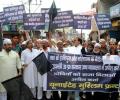
The Supreme Court of India granted bail to eight convicts in the 1987 Hashimpura massacre case. The case involved the killing of 38 people by personnel of the Provincial Armed Constabulary. The court considered the fact that the convicts have been incarcerated for over six years following the Delhi High Court's reversal of their acquittal by the trial court.

Merging tribunals may lead to administrative convenience, but pendency of cases is likely to increase

Delhi-based electric vehicle (EV) ride-hailing firm Evera Cabs, which grabbed headlines after acquiring 500 cars from the now-defunct cab service BluSmart, is stepping up its presence in the EV cab segment. The company is aiming for revenue of Rs 100 crore in the ongoing financial year (2025-26), up from Rs 18 crore in 2024-25.

Tahawwur Rana, accused in the 2008 Mumbai terror attacks, has renewed his plea for a stay on his extradition to India, citing health concerns and alleging potential torture. He argues that his extradition would violate US law and the UN Convention Against Torture. Rana's lawyers claim he is at risk of being subjected to torture in Indian detention facilities due to his Pakistani origin, Muslim religion, and medical conditions. The US Supreme Court had previously denied his emergency bid for a stay, but he has now appealed to Chief Justice John Roberts. The US government has declined to provide information on any commitment from India regarding Rana's treatment, further fueling his concerns.
Mumbai terror attack accused Tahawwur Rana has moved an 'emergency application' with the United States Supreme Court against his extradition to India, claiming that he will be tortured there since he is a Muslim of Pakistani origin.
The Supreme Court of India has formed a National Task Force (NTF) to address the growing concern of student suicides in higher educational institutions. The court took note of the recurring cases and directed Delhi Police to register FIRs on the complaints of families of two students who died by suicide at IIT Delhi in 2023. The NTF, chaired by former apex court judge Justice S Ravindra Bhat, will prepare a comprehensive report, including the identification of causes leading to suicides, analysis of existing regulations, and recommendations for strengthening protections. The NTF will also have the authority to conduct surprise inspections of higher educational institutions and make further recommendations to ensure a holistic approach to addressing mental health concerns and eliminating suicides.

A three-judge bench headed by Chief Justice DY Chandrachud said the error committed by the trial judge had been perpetuated by the high court.

The fate of properties worth Rs 15,000 crore inherited by actor Saif Ali Khan and his family from Bhopal's erstwhile rulers hangs in the balance due to uncertainty over filing an appeal against an order of the Office of the Custodian of Enemy Property. If an appeal is not filed by the Bhopal Nawab's successors, the properties could fall under the Centre's control, lawyers have said. The matter stems from a 2015 ruling that declared the Bhopal Nawab's property "Enemy Property" due to the eldest daughter, Abida Sultan Begum, migrating to Pakistan after the Partition. However, a 1962 order recognized Sajida Sultan Begum, the second daughter, as the sole successor to the properties after the death of Nawab Hamidullah Khan. The dispute is currently with the Mumbai-based Office of the Custodian of Enemy Property, following a Madhya Pradesh High Court order that directed the filing of a representation within 30 days. The high court's order also raised the issue of limitation as the appeal was filed after a significant period. The properties include Noor-Us-Sabah Palace, Dar-Us-Salam, Bungalow of Habibi, Ahmedabad Palace and Flag Staff House. The Enemy Property Act was passed in 1968 to regulate properties left behind in India by those who emigrated to Pakistan.

The two women -- Seema Koul and Vishalni Koul -- had moved the high court in 2018 after their provisional selection to the post of legal assistant in the department of disaster management relief, rehabilitation and re-construction under the PM package for Kashmiri migrants in December 1, 2017 forfeited on the ground that they have lost their migrant status having married non-migrant persons.

The Supreme Court on Tuesday imposed a cost of Rs 50,000 on the Centre for filing an appeal against an order of the Armed Forces Tribunal, which granted a liberalised pension to the widow of a soldier who died during a counter-terrorism patrol in Jammu and Kashmir.
Swamy Shraddananda, jailed for 30 years for killing his wife, has moved the Supreme Court seeking authorities to decide his mercy plea before the President in December, 2023.

In a significant verdict, the Supreme Court on Wednesday set aside the National Company Law Appellate Tribunal's (NCLAT) verdict that had stopped insolvency proceedings against embattled ed-tech firm Byju's. A bench of Chief Justice D Y Chandrachud, and Justices J B Pardiwala and Manoj Misra also reversed the order of the NCLAT approving Byju's Rs 158.9 crore dues settlement with the Board of Control for Cricket in India (BCCI) and directed the cricket board to deposit the settlement amount of Rs 158.9 crore with a committee of creditors.

The Supreme Court of India has ruled that a daughter has an indefeasible right to secure educational expenses from her parents, who can be compelled to provide necessary funds within their means. This ruling came in a matrimonial dispute where a daughter studying in Ireland refused to accept Rs 43 lakh given by her father towards her studies, which was part of the total alimony being paid to her mother. The court stated that the daughter has a fundamental right to pursue her education and that the parents can be compelled to provide necessary funds within their financial resources. The court also granted a decree of divorce by mutual consent to the estranged couple, directing them to abide by the terms of a settlement agreement they had reached.
The Supreme Court of India has expressed concern over the protracted trials in heinous offences related to Maoist activities, stating that indefinite incarceration violates the right to liberty under Article 21 of the Constitution. Two separate benches of the court granted relief to two accused, citing the delayed trials. One bench expedited the trial of a man accused of transporting ammunition for a banned organization, while the other granted bail to a man accused of transporting materials for Naxal activities. The court emphasized the importance of speedy trials and suggested the establishment of special courts to handle Maoist-related cases, aiming to expedite proceedings. The court also criticized the practice of examining an excessive number of witnesses, which can lead to indefinite delays in the conclusion of trials.

The CAS banned teenage figure skater Kamila Valieva in January for four years for doping, effective from December 2021, a decision that also stripped the Russian Olympic Committee of its gold medal in the team event at the 2022 Games, nearly two years after the competition.

A bench of Justices Surya Kant and Ujjal Bhuyan, however, said there can be no straitjacket formula which enumerates that every case concerning the consideration of bail should depend upon the filing of a charge sheet.

The division bench of justice Sudhir Singh and justice Jasjit Singh Bedi was hearing a woman's plea against the divorce granted in favour of her husband by a family court in July this year.

The sacrament based Hindu marriage may be dissolved (in law), in limited circumstances and too only on the strength of evidence led by the parties, it said.

This Women's Day Week, we celebrate the groundbreaking achievements of Justice Anna Chandy, Justice M Fathima Beevi and Justice Leila Seth.
A bench of Justices Abhay S Oka and Augustine George Masih said once a case has been made out for the grant of bail to an accused, the court cannot decline the relief.

The Supreme Court on Thursday exercised its extraordinary constitutional powers and ordered the liquidation of grounded air carrier Jet Airways' assets. A bench of Chief Justice D Y Chandrachud and Justices J B Pardiwala and Manoj Misra set aside the National Company Law Appellate Tribunal (NCLAT) decision upholding the resolution plan of Jet Airways and approved the transfer of its ownership to Jalan Kalrock Consortium (JKC).

The Supreme Court on Wednesday expunged the observations made by a single judge bench of the Punjab and Haryana high court against the apex court in a contempt case, saying they were "scandalous" and "unwarranted".
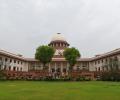
The Supreme Court of India has laid down guidelines for courts when ordering DNA tests to ascertain paternity. The court emphasized the need to balance the interests of all parties involved, including the child, parents, and other stakeholders. It also recognized the potential for infringement of privacy and the social stigma associated with illegitimate children. The court stressed that DNA tests should only be ordered when existing evidence is insufficient and when such tests are in the best interests of all parties involved.

The House was adjourned seconds after convening amid ruckus over various issues, and Rahul Gandhi left Parliament soon after that.
